


Used Truck Thermostats, Thermostat Housings & Coolant Outlets






Thermostats are a key part of the engine cooling system on a truck, lorry or HGV. Their job is to regulate coolant flow between the engine, radiator and associated cooling circuits so that the engine reaches and maintains the correct operating temperature. On modern commercial vehicles the thermostat is often supplied as part of a larger thermostat housing, coolant outlet assembly or water connection unit rather than as a simple loose valve. For workshops and fleet operators, correct matching is important because a wrong housing, hose connection or sensor provision can cause coolant leaks, poor warm-up, overheating or incorrect coolant routing.
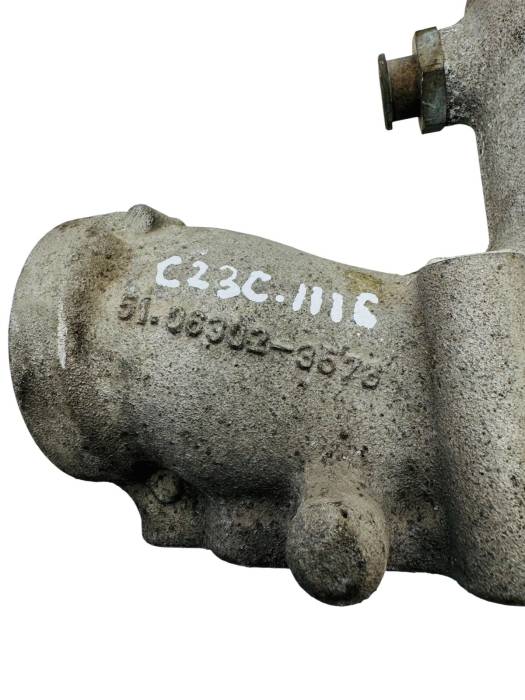
VRA Truckparts lists used OEM Thermostats and related thermostat housings removed from dismantled commercial vehicles. Current examples in this category include genuine used MAN TGX/TGS thermostat housing and coolant outlet assemblies for Euro 6 applications, with references such as MAN 51064043097, 51064040111, 51063023576 and casting reference 51.06302-3576. These parts are associated with MAN D2066 and D2676 engine applications where the housing layout, coolant ports and mounting points must be compared carefully. Stock changes depending on the donor trucks being broken, so each listing should be checked for the exact part number, condition notes, photos and included components before ordering.
What you will find in the Thermostats categoryThe Thermostats category sits within engine cooling and is intended for used OEM parts that control or route coolant around the engine. Availability is based on donor vehicle dismantling, so the parts listed at any one time may be narrow and brand-specific rather than a complete aftermarket range. Where possible, listings include manufacturer part numbers, casting numbers, engine references and photos to help buyers compare with the original part removed from the vehicle.
- Thermostat housings for truck engines, including used OEM MAN TGX/TGS examples.
- Coolant outlet assemblies where the thermostat is built into or fitted to a larger water connection housing.
- Engine cooling water connections with hose ports, flange faces and mounting holes that must match the vehicle.
- MAN part number references such as 51064043097, 51064040111 and 51063023576 where shown in the individual product listing.
- Casting number references such as 51.06302-3576, useful where the visible casting mark is easier to confirm than the catalogue number.
- Euro 6 cooling components from commercial vehicle donor engines, including D2066 and D2676 applications when available.
- Related engine cooling fittings such as seal faces, gasket areas, hose necks and bolt-on outlet sections included with the listed assembly where pictured.
Current Thermostats stock is led by MAN truck applications, particularly MAN TGX and MAN TGS thermostat housing assemblies. The supplied examples refer to Euro 6 vehicles and MAN D2066 or D2676 engines, but this does not mean every MAN TGX or TGS uses the same part. Trucks can vary by engine code, emission standard, chassis specification, production date, cooling package and auxiliary equipment. Other truck brands may appear in this category when stock becomes available, but buyers should always use the details in the individual listing rather than relying on the category name alone.
- MAN TGX thermostat housing and coolant outlet assemblies, subject to part number match.
- MAN TGS used OEM Thermostats and related housings where donor vehicle details support the fitment.
- MAN D2066 engines where references such as 51064043097 or related numbers are shown.
- MAN D2676 engines where the housing layout and OEM reference match the original unit.
- Euro 6 applications where coolant routing, housing shape and emissions-generation differences must be checked carefully.
Correctly working Thermostats help the engine reach the right temperature and then hold it within the intended operating range. If the thermostat sticks open, the engine may run too cool, warm up slowly and suffer poor efficiency. If it sticks closed or the housing restricts coolant flow, the engine can overheat quickly, risking serious damage. On heavy commercial vehicles, the thermostat housing also carries coolant through shaped passages and hose connections, so a cracked outlet, damaged seal face or incorrect port layout can cause a coolant loss even if the thermostat valve itself is sound.
For HGV repairers, this small part of the cooling system has a large effect on uptime. A workshop may be replacing a thermostat housing because of leakage, corrosion, gasket failure, crash damage, stripped threads or a broken hose neck. Choosing a used OEM assembly with the correct casting and manufacturer reference can be preferable to adapting a part that looks similar but routes coolant differently. As with all engine cooling parts, a careful comparison before fitting reduces the risk of repeat strip-down work.
Typical reasons to replace ThermostatsThermostats and thermostat housings are commonly replaced as part of an overheating investigation, coolant leak repair or wider engine cooling overhaul. The visible failure may be on the housing rather than the thermostat itself, especially on modern truck engines where the housing is a shaped assembly with several sealing faces.
- Engine overheating caused by a thermostat stuck closed or restricted coolant flow.
- Slow warm-up or low running temperature caused by a thermostat stuck open.
- Coolant leaks from gasket marks, sealing faces, hose connections or outlet flanges.
- Cracked, corroded or impact-damaged thermostat housing or coolant outlet body.
- Damaged bolt holes, stripped threads, broken mounting lugs or distorted flange faces.
- Incorrect previous replacement part fitted, with different pipe routing or mounting layout.
- Coolant contamination, corrosion staining or heavy surface oxidation around the housing area.
Thermostats are not always interchangeable between engines that look similar from the outside. Before ordering, compare the original part against the listing photos and references. The safest approach is to match the OEM number and confirm the physical layout at the same time, especially on MAN TGX/TGS Euro 6 applications where several closely related housings may be used.
- Check the truck make, model and generation, such as MAN TGX or MAN TGS.
- Confirm the engine type and code, for example D2066 or D2676 where relevant.
- Match the Euro or emissions standard, especially Euro 6 cooling system layouts.
- Compare the OEM part number, such as 51064043097, 51064040111 or 51063023576 if shown.
- Look for casting references such as 51.06302-3576 where they appear on the original housing.
- Compare hose outlets, coolant ports, flange positions and bolt hole layout.
- Check whether sensors, plugs, blanking points or extra fittings are present or absent.
- Review condition notes, gasket faces, mounting points and all listing photos before purchase.
If you are unsure, use our guidance on how to find the right truck part and compatibility and VIN checks. Supplying the vehicle registration, VIN, engine code, OEM reference and photos of your original thermostat housing can make it easier to compare the part before ordering. Compatibility cannot be guaranteed from the model name alone, so always check the listed reference numbers and the visible design.
Used OEM parts from dismantled trucksVRA Truckparts supplies used genuine OEM truck parts removed from donor commercial vehicles. Thermostats, thermostat housings and coolant outlet assemblies are removed during dismantling, visually checked, photographed and listed with available part references where they can be identified. Item descriptions may mention visible condition such as normal used wear, surface oxidation, dirt staining, gasket marks or other signs expected on a used engine cooling component.
Used parts are stored for resale after dismantling, but buyers should read each listing carefully to see exactly what is included. A thermostat housing may be sold as pictured with particular fittings, outlets or sensors included, while seals, gaskets and consumables are normally best renewed during installation. For more background on how parts are handled, see our dismantling and quality process and the information on warranty and part condition.
Fitting considerations for ThermostatsWhen fitting used OEM Thermostats or a thermostat housing, workshops should inspect the mating surfaces on the engine and replace any required gaskets, O-rings or seals according to the vehicle manufacturer's procedure. Cooling systems should be refilled with the correct coolant specification, bled properly and checked for leaks once the engine reaches operating temperature. Any old coolant contamination, pressure issues, blocked radiator cores, failed expansion caps or water pump faults should also be considered if the vehicle has suffered overheating.
A used thermostat housing should not be forced into place if the bolt pattern, hose angle or outlet position does not line up. Even a small difference in casting layout can place stress on hoses and sealing faces, causing future leaks. Compare the original component side by side with the replacement before fitting and confirm that all ports and brackets are in the same position.
Related categoriesThermostats are one part of the wider engine cooling system. If the fault is not isolated to the thermostat or housing, it may also be worth checking related cooling components such as radiators, coolant pipes, expansion tanks, water pumps, cooling fans, fan shrouds, intercooler pipework and temperature sensors where available in the store. Stock changes regularly as donor trucks are dismantled, so related items may appear depending on current availability.
For vehicle matching support, the most useful internal resources are how to find the right truck part, compatibility and VIN checks and trucks we dismantle. These pages explain the information that helps identify used OEM truck parts accurately, especially when a component has several similar versions.
Delivery, payment & returnsBefore placing an order for Thermostats, check the product photos, part references and condition notes carefully. If the part number is not visible on your old component, compare the shape, hose outlets and mounting points and contact the team with vehicle details where needed. Practical information about ordering is available on delivery and shipping, payment and VAT and returns and refunds. These pages help workshops, fleet operators and trade buyers understand the buying process before committing to a used OEM cooling component.