


Volvo FH4 EBS Warning? Diagnose Before Replacing the Brake ECU
An EBS warning, brake-system message or abnormal braking feel on a Volvo FH4 or FM4 is not evidence that the brake ECU has failed. It can be associated with wiring, connectors, wheel-speed information, power or ground supply, air-system faults, a modulator, a sensor, a previous repair, coding or another vehicle-specific issue. Because braking is safety-critical, the right response is a controlled diagnosis—not a used-parts swap.
This article uses VRA Truckparts’ current Knorr-Bremse stock as an identification starting point. It currently includes a Volvo FH4/FM4 EBS7 brake ECU described with references 21933116, 0486110041, 21664214 and 23658611. Check the live listing, photographs, complete references, condition and supplied contents before ordering. A matching-looking control unit, a partial number or the words “Volvo FH” do not prove compatibility.
Treat a brake warning as a safety issue first
If there is a red brake warning, reduced braking, an air-pressure concern, a brake-pedal concern, uneven braking, a damaged cable or any doubt about roadworthiness, do not continue operating the vehicle. Park safely, secure it and follow the exact Volvo procedure for the vehicle. Arrange assessment by a competent commercial-vehicle technician where required.
Before anything is disconnected, record the dashboard message, warning lamps, the conditions when it occurred and any recent work on brakes, wheels, suspension, batteries, chassis wiring or body equipment. Preserve diagnostic trouble codes and relevant freeze-frame or live data before clearing them. A code that names a circuit or component is a diagnostic lead; it is not, on its own, an instruction to replace an ECU.
Why an EBS ECU is only one possible cause
An electronic braking system receives and processes information from several parts of the vehicle. A fault message can be triggered by an issue outside the ECU itself, including a damaged harness, a loose or corroded connector, a wheel-speed-sensor issue, an air leak, low system voltage, a poor ground, a modulator fault or incorrect configuration after previous work.
Do not bridge terminals, probe unknown pins, fit a larger fuse, release the parking brake to “test” a fault, apply air to an unknown connection or use generic wiring information as a substitute for the correct Volvo documentation. Braking and pneumatic components may react unexpectedly, and an incorrect test can create a hazardous condition or overwrite useful evidence.
Safe checks a technician can correlate
Using the correct vehicle-specific diagnostic procedure, a technician can relate stored faults to live values and the actual symptom. With the vehicle secured and isolated as specified, accessible visual evidence may include loom chafing, crushed cable, a missing connector lock, water ingress, heat damage, a disturbed wheel-end area or signs of collision damage. These observations are useful, but none proves that the ECU is defective.
Where a fault followed battery replacement, welding, bodywork, axle work or repair near the chassis harness, include that history in the diagnosis. Voltage and communication problems may have a different root cause from a repeated wheel-end or pneumatic fault. The repair process and any programming requirements must be established for the exact VIN before a control unit is ordered or fitted.
How to match a used EBS ECU responsibly
Only when diagnosis supports replacement should the original module be identified. Photograph the label in place where possible and record every visible reference, manufacturer number, hardware index, connector arrangement and mounting details. Compare the information against the actual listing—not merely against a web search or a partial number.
The VRA references above are identification leads, not a universal interchange claim for every FH4 or FM4. Cab and chassis configuration, axle arrangement, braking specification, hardware version, software and vehicle configuration can matter. The listing may also be for the module only; do not assume it includes brackets, fasteners, loom sections, configuration data or programming.
Use VRA’s VIN and compatibility guidance before purchase. Provide the VIN, complete number from the removed unit, clear label and connector photographs, plus a concise account of the diagnosed fault. If the label is unreadable, begin with VRA’s part-finding guide rather than selecting a module by shape.
Inspect before fitting—and do not assume plug-and-play
- Compare every label, connector key, pin condition, mounting point and housing detail with the removed module.
- Confirm the exact supplied contents from the product photographs and description.
- Inspect for cracked housings, water marks, bent pins, damaged locks or evidence of incorrect previous repair.
- Keep electrical connectors clean and dry; do not force a connector that does not seat normally.
- Follow the manufacturer-approved process for configuration, coding, calibration and post-repair validation for the exact vehicle.
A replacement ECU must not be treated as a way to bypass a recurring brake-system fault. If the warning remains, returns or changes after fitting, stop and revisit the original evidence, wiring, air system, wheel-end components and the complete diagnostic process. The vehicle should only return to service after the prescribed checks have been completed by a competent person.
Practical takeaway
A Volvo FH4/FM4 EBS warning needs disciplined, safety-first diagnosis. Preserve the fault data, check the surrounding system through the correct procedure and establish whether the ECU is genuinely implicated. If a used Knorr-Bremse module is justified, match the complete references and configuration to the original part and VIN, confirm what is supplied, and ensure the required vehicle-specific programming and validation are completed.
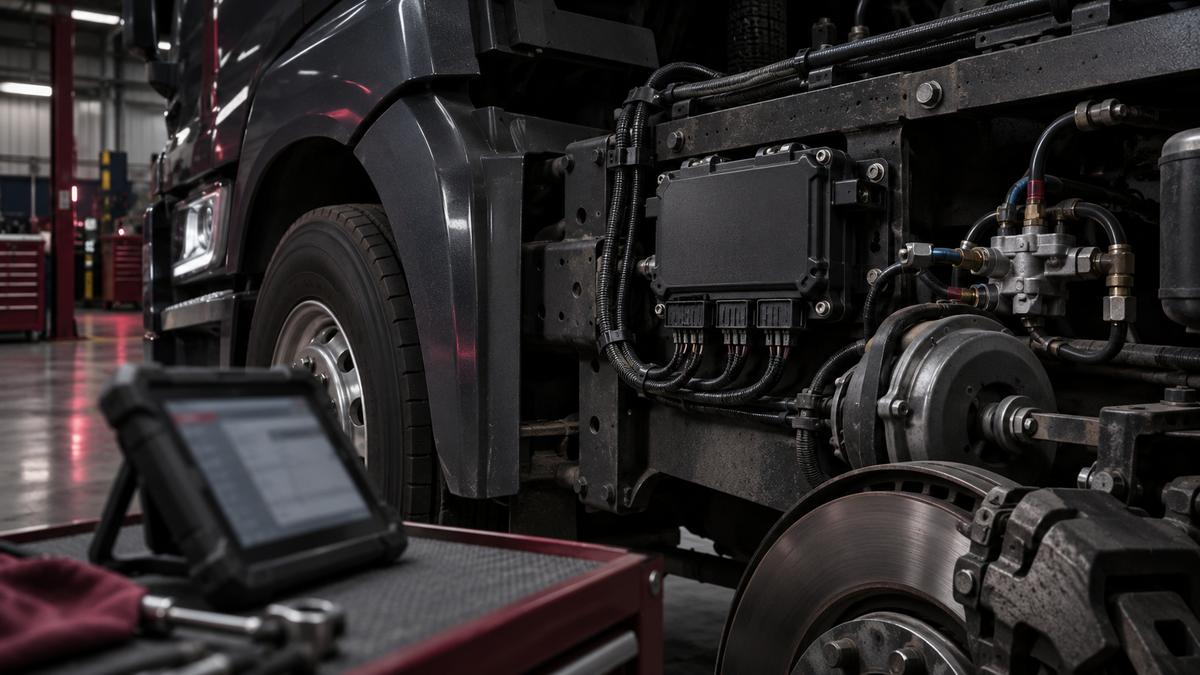
Editorial cover image illustrates a generic commercial-truck brake electronics diagnostic scene, not a listed VRA item.
Help other users with the choice - be the first to share your opinion about this post.