


Scania Steering Heavy or Noisy? Check the System Before the Pump
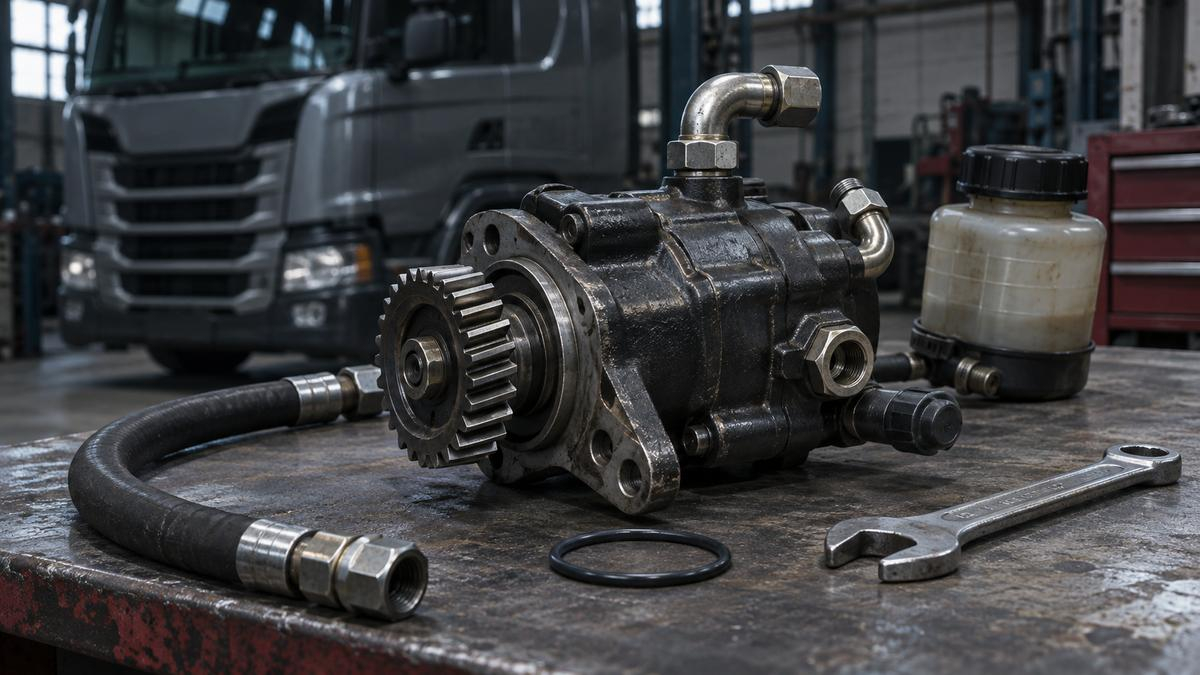
Heavy steering, a new whine when manoeuvring or oil around the steering-pump area can make a Scania driver suspect the hydraulic pump. But these symptoms do not prove pump failure. Low fluid, air entering the suction side, a restricted line, steering-gear problems or a mechanical drive fault may look similar. On a heavy goods vehicle, steering defects need prompt professional attention, not trial-and-error parts orders.
First decide whether the truck is safe to move
Record when the problem occurs: at idle, with the engine cold, in one steering direction or throughout a journey. Note warnings, changing steering effort, vibration, fluid loss and any intermittent whine. The Driver and Vehicle Standards Agency's HGV walkaround guidance requires checks that power-assisted steering works, that steering does not jam and that excessive play is absent. Do not return a truck with compromised steering to service until a qualified technician has assessed and rectified the problem.
Secure the vehicle and consult the Scania instructions for the exact VIN. Do not repeatedly hold the steering against its stops to reproduce a noise. Hydraulic fluid injected through skin is an emergency: never search for pinhole leaks with fingers.
A safe diagnostic sequence before ordering a pump
1. Check the reservoir and specified fluid
Under the manufacturer's inspection conditions, check fluid level and appearance. Low level suggests loss or inadequate filling, but does not identify the failed component. Inspect the reservoir, hoses, steering gear and pump for staining. Foamy or heavily contaminated fluid warrants investigation. Use only the fluid specification and checking procedure for that chassis; never mix in an unidentified universal steering oil.
2. Trace external leaks
With the engine stopped and parts safe to approach, inspect accessible unions, pump body, hoses and their supports. Oil can travel along a pipe before dripping around the pump. Look for chafing, cracked hose covers, loose brackets and damaged fittings. If necessary, a technician can use approved diagnostic methods. Never loosen a pressurised hydraulic connection to see whether it leaks.
3. Investigate whine, air and contamination
A whining noise may indicate aerated oil, an inlet restriction or internal wear. Foaming is a clue, not confirmation of one cause. Inspect applicable suction plumbing and reservoir arrangements under Scania's instructions, especially after recent repairs. Check for dirt introduced while a hose was disconnected. Replacing a pump without correcting air ingress or contamination can leave the noise unchanged or damage the replacement.
4. Separate pump, drive and steering-gear faults
The used unit described below is gear driven. Inspect visible mounting and drive arrangements for damage without opening the safety-critical assembly or guessing at tolerances. Steering effort can also be affected by the steering box, axle components and their condition. Proper diagnosis may need manufacturer-approved pressure or flow testing performed with suitable equipment. Generic pressure figures from a different vehicle are not reliable for this repair.
5. Document what is fitted
Photograph the pump label, gear interface, bracket and fluid connections before removal. Record the VIN, engine configuration, original component number and diagnostic findings. If contamination is suspected, document the condition of affected fluid and pipework. These records reduce the chance of fitting a part that resembles the original but does not match.
What the VRA used-pump listing establishes
VRA Truckparts lists a used Scania hydraulic power-steering pump, SKU VRA-1697-989. Its description identifies part number LH2112170, Scania reference 1 439 958 / 1439958 and code LF75A. The seller describes a gear-driven assembly with the visible gear, attached pipes/hoses and mounting bracket as photographed. These are listing-specific details, not specifications for every Scania pump.
The seller grades the part B and notes oil residue, stains, surface corrosion, scratches and age-related wear. It says the unit was checked before removal and hydraulic functionality is tested where vehicle and system access permit. This does not prove a particular certified pressure-and-flow report accompanies it. Ask what testing was actually completed and request current photos if condition is critical.
The listing refers to Scania P/G/R/T-series applications but explicitly requires part-number and vehicle-specific confirmation. A model-family name is not evidence of direct interchangeability. Check live availability and orderability with VRA before booking repair time; no stock or delivery promise is made here.
Six comparisons before buying a used pump
- Original number: compare LH2112170 and 1439958 with the removed unit and the correct VIN-specific parts catalogue.
- Drive: check gear, interface, mounting and drive configuration rather than relying on similar external shape.
- Ports: compare hose ends, unions, pipe routing and the orientation of each connection.
- Condition: examine the gear area, seams, seals, corrosion, mountings and port protection in real photographs.
- Testing: ask what operating checks were performed. Visual inspection is not a measured hydraulic-performance certificate.
- Completeness: confirm whether seals, fasteners, approved fluid and other service items must be ordered separately.
Use VRA's VIN and compatibility policy and browse its Scania parts catalogue. Related OE references should never be assumed to be direct replacements without checking the actual truck configuration.
Refitting and final checks
Steering hydraulics should be fitted by a qualified commercial-vehicle mechanic following Scania's cleanliness, fluid, sealing, tightening and bleeding instructions. VRA's general fitting guidance provides background, but cannot replace the manufacturer's procedure. Keep dirt and metal fragments out of exposed connections; contaminated oil can harm both the pump and steering gear.
Before the truck returns to service, verify fluid level, absence of leakage, normal assistance and no abnormal noise through the specified inspection procedure. Investigate any warning, stiffness or excessive play. Record the replacement's part number and the completed checks.
Practical takeaway: investigate fluid level, leaks, aeration, pipework and steering gear before condemning the pump. A used OE unit may suit a correctly identified repair, but it cannot cure an unfixed hydraulic-system fault.
Cover imagery is a cinematic editorial illustration, not a photograph of the particular used pump.
Help other users with the choice - be the first to share your opinion about this post.