


MAN Cranks but Won’t Start? Check the Crank Sensor First
An engine that cranks but will not start, cuts out, or shows an intermittent engine-speed related warning on a MAN TGA, TGL, TGM, TGS or TGX needs a methodical diagnosis. It is tempting to order a crankshaft position sensor straight away, but the symptom can also come from battery voltage, cable connections, wiring damage, a connector fault, power or ground supply, engine-management issues, fuel-system faults or a mechanical problem. A no-start symptom is not a part number.
This guide uses VRA Truckparts’ current Bosch crankshaft position sensor listing as an identification example. The listing shows Bosch 0281002662 and MAN reference 51271207038. It also makes clear that the item is supplied as pictured, sensor only. Check the live page, photographs, full references, condition and availability before ordering. A matching-looking two-pin sensor, partial reference or model name alone does not prove fitment.
Record the exact failure before parts are removed
Start with facts that can be repeated: does the starter turn the engine at normal speed; does the fault occur cold, hot or after vibration; is the issue permanent or intermittent; and are any warning messages present? Note recent battery work, wiring repairs, water ingress, collision damage or engine work. Preserve diagnostic fault codes and relevant data before clearing anything. A stored code may point the technician towards an engine-speed signal concern, but it still needs to be interpreted using the correct MAN diagnostic process for the VIN.
Do not continue cranking for long periods, spray starting fluids, bridge terminals, unplug sensors with the ignition live, or probe unknown ECU circuits. These actions can create additional faults, damage components and obscure the original evidence. If the vehicle has stopped in an unsafe place or displays other serious warnings, arrange appropriate recovery or workshop assessment.
What the crankshaft sensor does — and what it cannot prove
The engine-management system uses a crankshaft or flywheel-speed signal as part of determining engine speed and position. A missing or implausible signal can therefore be relevant to starting and running, but it is not the only possible explanation. An apparently similar problem can result from low cranking speed, corroded connections, a damaged loom, a loose plug, an ECU supply issue, another sensor fault or a fault elsewhere in the engine system.
Before condemning the sensor, a competent technician should use vehicle-specific information to compare stored faults, live data and the actual symptom. Check accessible wiring for obvious chafing, heat damage, trapped sections, broken connector locks, oil contamination or water ingress. These observations are not proof of a failed sensor. Avoid pulling on the loom or forcing a plug: a damaged harness near the sensor can mimic an internal sensor failure.
Safety and access matter
Park securely, isolate the electrical system as the manufacturer specifies and allow hot engine or exhaust components to cool before work begins. Sensor access and routing vary by engine family and chassis. Do not work beneath an unsupported cab, enter an unsafe access area, or route a replacement lead by guesswork. The correct repair documentation for the exact vehicle remains the authority for removal, torque, sealing and subsequent checks.
Matching a used sensor correctly
When diagnosis supports replacement, photograph the original component in place and record every marking before removal: manufacturer number, MAN OE number, connector shape and pin arrangement, cable length and route, mounting ear, sensor nose and the bolt or clamp arrangement. Compare these details with the actual VRA listing, not only with a search result.
The VRA Bosch example is described with the full Bosch number 0281002662, a two-pin connector and a single-bolt fixing. Its product information lists MAN references 51271207038 and 51271207037 among related references. Those are useful identification leads, not a blanket interchange statement across every MAN engine, production year or ECU configuration. The listing itself asks buyers to match the full number and plug style.
Use VRA’s VIN and compatibility guidance before placing an order. Provide the VIN, complete original reference, clear photos of the connector and mounting point, plus a concise description of the diagnosed fault. If the original label cannot be read confidently, use the part-finding guide rather than selecting an item by appearance.
Inspect the supplied used part before fitting
- Compare all numbers, connector keys, mounting face and sensor length with the removed part.
- Confirm what is included; do not assume a fixing bolt, seal, loom or retaining clip is supplied unless shown and confirmed.
- Check the housing, connector, locking features and mounting ear for transit damage or corrosion before installation.
- Keep the connector and sensor mounting area clean; do not force a plug or modify a mounting point to make a near match fit.
- Follow the approved diagnostic process after fitting, including any required code clearing or functional verification.
If the engine still will not start or the original fault returns, do not assume the replacement item has failed. Revisit the recorded evidence, the wiring and connector condition, electrical supply and the full diagnostic procedure. Replacing parts sequentially without evidence can increase downtime and cost while leaving the actual fault untouched.
Practical takeaway
A MAN crank/no-start or intermittent engine-speed symptom calls for diagnosis before ordering a sensor. Preserve fault information, check the accessible wiring safely, and use VIN-specific data to establish whether the crankshaft signal is genuinely at fault. If a used Bosch sensor is justified, match its complete reference, connector, dimensions and mounting arrangement to the original part—and confirm it with VRA before fitting.
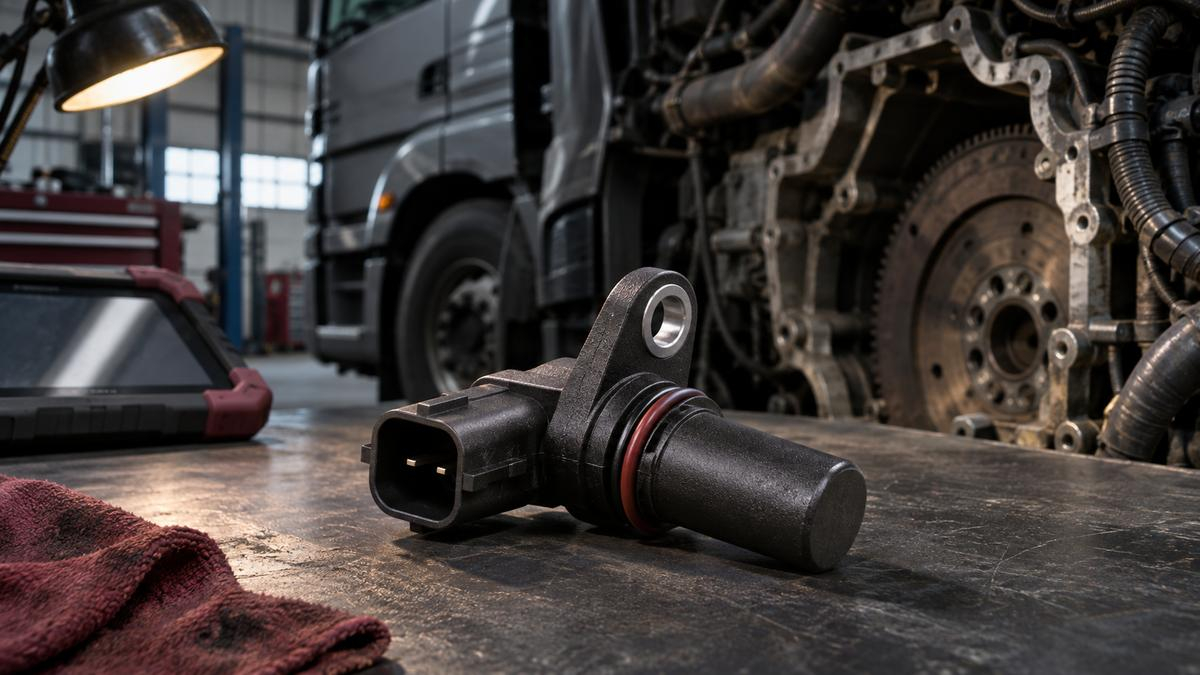
Editorial cover image illustrates a generic commercial-truck engine diagnostic scene, not the listed VRA item.
Help other users with the choice - be the first to share your opinion about this post.