


DAF CF/XF Uneven Ride Height? Check ECAS Sensor Safely
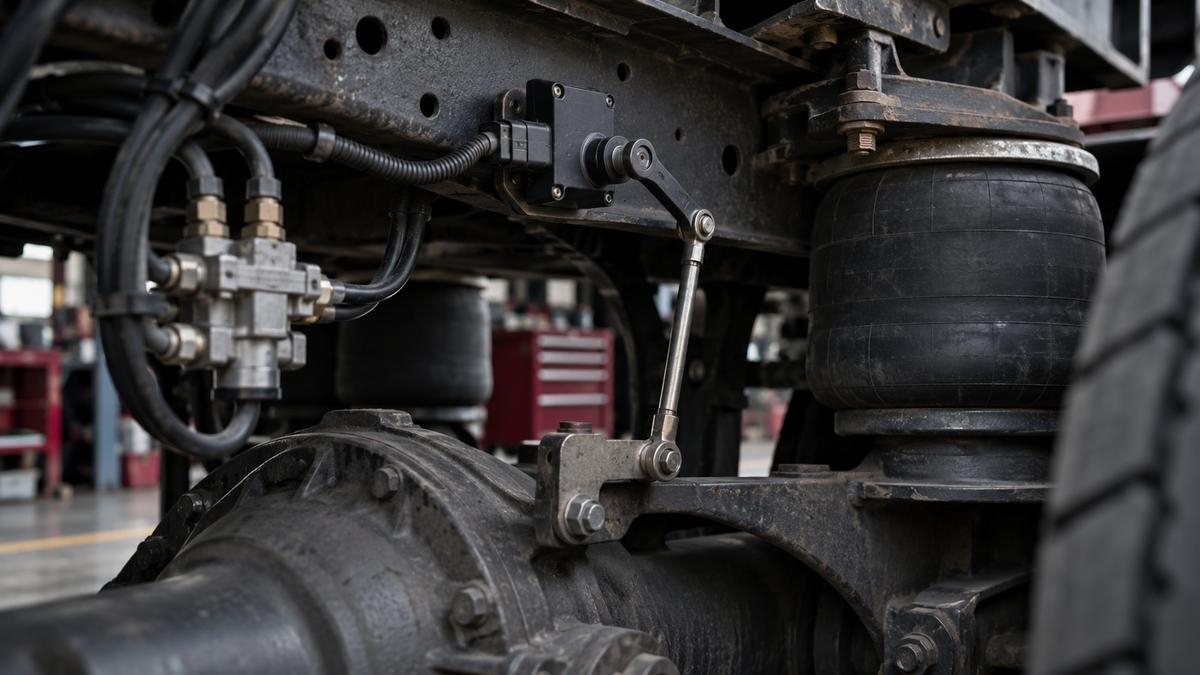
An uneven ride height, an ECAS warning, suspension that will not raise or lower as expected, or a vehicle that appears to sit incorrectly after parking does not prove that the height sensor is defective. On a DAF CF or XF, the symptom can also involve air leaks, mechanical linkage, wiring, connectors, power supply, a valve block, calibration, stored fault information or a previous repair. Air suspension is safety-critical: diagnose the vehicle first, then decide whether a part is justified.
This guide uses VRA Truckparts’ WABCO ECAS height sensor 4410501000 as an identification example. The listing describes a used WABCO sensor with a lever and connector as shown. Check the live listing, photographs, complete reference, condition and supplied contents before ordering. A similar-looking lever sensor, a partial number or a DAF model name alone is not proof of fitment.
Make the vehicle safe before any inspection
A vehicle with abnormal suspension height may have reduced clearance, unexpected movement or an unsafe load condition. Do not work beneath a vehicle supported only by its air suspension, and do not place hands, tools or limbs near moving suspension parts or linkages. Park on level ground, apply the parking brake, chock wheels where required and follow DAF’s procedure for the exact vehicle. Any work requiring the chassis to be raised or entered beneath must use the correct approved supports and be carried out by a competent person.
Record the complaint before disconnecting anything: which axle or side appears affected; whether the fault is constant or intermittent; the dashboard message; the conditions when it began; and any recent tyre, axle, body, battery, welding or suspension work. Preserve diagnostic trouble codes and relevant live data before clearing them. A code associated with a height-sensor circuit is a diagnostic lead, not an instruction to replace a sensor.
Why a height symptom has more than one possible cause
Electronic controlled air suspension uses height information as part of controlling the relationship between chassis and axle. A fault can therefore arise from the sensor, its lever or linkage, a damaged loom, a connector issue, air supply or leakage, a valve-related concern, low voltage, incorrect calibration or a problem elsewhere in the vehicle system. The apparent ride height can also be affected by loading, ground level and the vehicle’s operating mode.
Do not release air, bridge terminals, force a linkage, fit a larger fuse or probe unknown connector pins. Do not try to “level” the vehicle by bending a lever or changing its position without the prescribed procedure. Those actions can create a crush hazard, damage equipment, alter calibration or make the original fault harder to identify.
Evidence that is useful—but not conclusive
With the vehicle secured and isolated as specified by the manufacturer, a technician may inspect accessible areas for obvious linkage damage, a detached or seized lever, bent brackets, chafed wiring, stretched cable, missing connector locks, corrosion, water ingress or impact damage. These observations help direct diagnosis, but they do not prove that the sensor has failed internally. The correct DAF diagnostic process should correlate the physical inspection with fault data and live readings for the exact VIN.
Matching a used WABCO ECAS sensor
Only after diagnosis supports replacement should the removed component be identified. Photograph the label and mounting arrangement before removal, then record every visible WABCO and vehicle reference, connector shape, pin count, lever orientation, mounting-hole position and linkage arrangement. Compare these with the actual listing and with the original part.
The reference 4410501000 is a useful identification lead from the VRA example, not a universal interchange claim for every DAF CF or XF. System version, chassis configuration, axle position, model year, hardware revision and calibration requirements can matter. Check VRA’s suspension and steering stock carefully: it includes different components which must not be selected by appearance alone.
Before purchase, use VRA’s VIN and compatibility guidance. Supply the VIN, the complete number from the old sensor, clear photographs of the connector, lever and mounting points, plus the precise fault symptoms. If the original label is missing or unreadable, use the part-finding guide rather than assuming that a sensor with a similar plug is interchangeable.
Inspect the replacement before fitting
- Compare every number, connector key, lever shape, mounting point and linkage position with the removed part.
- Check the housing, lever pivot and mounting ears for cracks, corrosion, distortion or excessive play.
- Inspect connector pins, seals and locks; keep the plug clean and dry.
- Confirm what is included from the listing photos—do not assume bolts, linkage rods or brackets are supplied.
- Follow the vehicle-specific procedure for installation, calibration and post-repair checks.
A used sensor is not a shortcut around an unresolved air-system or wiring fault. If the warning remains, ride height is still abnormal or the fault returns after correct fitting and calibration, stop and revisit the saved evidence and the complete diagnostic process. The vehicle should only return to service after the required checks have been completed by a competent technician.
Practical takeaway
For a DAF CF or XF with an ECAS-related ride-height concern, begin with safety, clear fault evidence and the surrounding system—not a parts order. If diagnosis supports a replacement, match the full references, connector, lever and mounting layout to the original component and VIN. Review the condition notes and photographs for any used part, confirm what is supplied and carry out the specified calibration before the vehicle is put back into service.
Editorial cover image illustrates a generic commercial-truck air-suspension inspection scene, not a listed VRA item.
Help other users with the choice - be the first to share your opinion about this post.