


DAF CF Front-View Mirror Damage? Check Fitment First
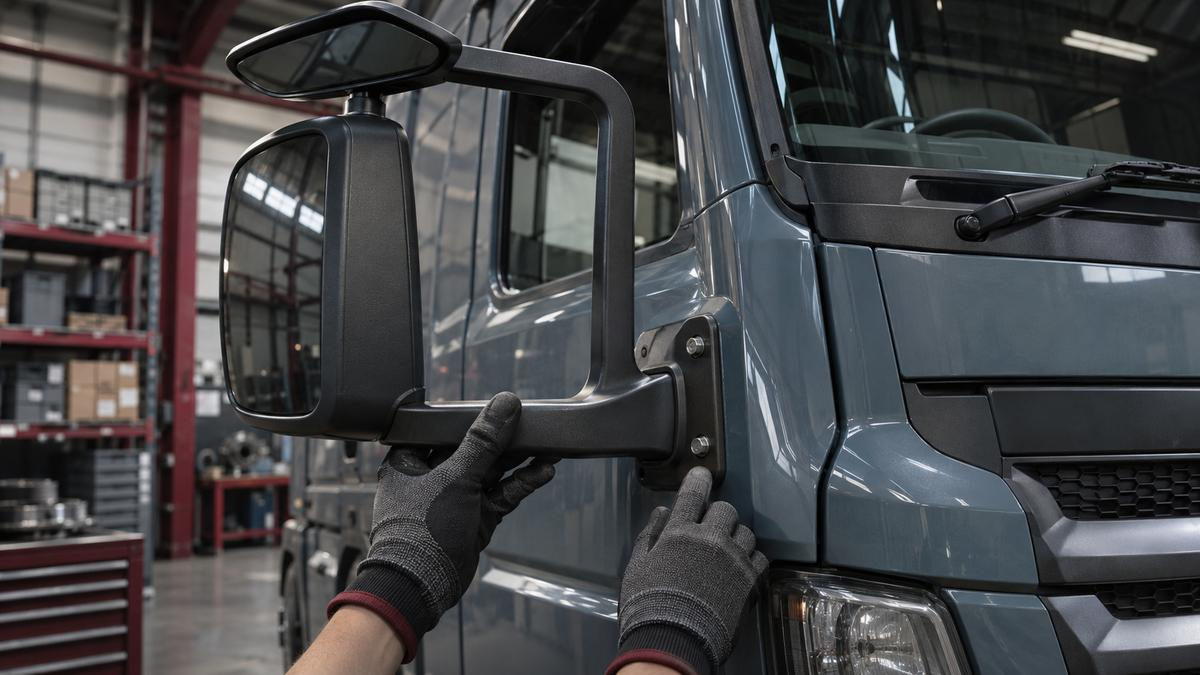
A damaged or poorly positioned front-view mirror is not merely a cosmetic issue. On a DAF CF, it can affect the driver’s view of the area immediately in front of the cab—a zone that matters when manoeuvring in depots, urban traffic and loading areas. A cracked lens, loose arm, vibration, water ingress or failed adjustment should be dealt with carefully, but it does not automatically mean the complete mirror assembly is the cause.
This guide uses VRA Truckparts’ current DAF CF front-view mirror listing as an identification example. The listing describes a used Unitruck item with references 1816905 and 1684033. Check the live listing, photographs, complete references, condition, supplied contents and availability before ordering. A mirror that looks similar, or a match on just one number, does not prove that it is correct for a particular DAF CF.
Make the area safe before inspecting the mirror
If the mirror is loose enough to move, has sharp broken glass, obstructs the driver’s view, or has been damaged in an impact that may also have affected the cab or door, do not treat it as a routine replacement job. Park safely and follow the operator’s procedures. A competent technician should assess any damage to the mounting area before the truck returns to service.
Record what has changed: does the mirror vibrate only at speed; has the glass cracked after a strike; has electric adjustment stopped; is the heater inoperative; or is the view blocked by a misaligned arm? Note whether there was a recent body repair, door adjustment, cab work, pressure-washing incident or minor collision. Photograph the mirror head, arm, bracket, connectors and any damage while they are still in place.
Separate a mirror fault from the surrounding system
A front-view mirror assembly may include glass, a housing, an arm, a bracket, adjustment mechanism, wiring and—depending on the exact specification—heating or other electrical functions. A poor view can come from more than one source. The glass may be damaged while the arm and mount are sound; the mirror may shake because a bracket or cab mounting point is loose; or an adjustment issue may involve a connector, wiring, switch or power supply rather than the mirror itself.
Do not force an electric mirror head, bridge terminals, fit a larger fuse or probe unknown pins. Do not bend an arm to “make it fit” or use adhesive as a substitute for a secure mounting. These actions can create a safety risk, damage wiring or hide evidence of collision damage. Use DAF vehicle-specific documentation and the correct workshop procedure for the exact vehicle when electrical or structural inspection is required.
What can be checked visually
With the vehicle secured and the system isolated where the manufacturer requires it, accessible observations may include cracked glass, a split housing, missing caps, corrosion, a loose fastener, damaged loom insulation, water in a connector, broken connector locks or contact marks after an impact. These findings are useful evidence, but they do not by themselves confirm which part must be replaced.
For a front-view mirror, correct position is as important as the part itself. After any repair, the field of view must be set and checked using the applicable vehicle and legal requirements. Never assume that a mirror housing from another cab variant, arm length or mounting position will deliver the same view.
How to match a used DAF CF front-view mirror
Once the diagnosis supports replacement, record every visible marking on the removed component. Compare the actual item with the VRA listing and the original part using the following points:
- full OE and manufacturer references, including suffixes and labels;
- exact position: front-view/under-view, not main door or kerb mirror;
- left- or right-hand location as specified by the vehicle and listing;
- arm shape and length, bracket design and mounting-hole arrangement;
- mirror-head shape, glass curvature and housing details;
- electrical functions, connector housing and pin count where fitted;
- cab, model year and relevant vehicle specification.
The references 1816905 and 1684033 are useful leads for the quoted VRA example, not a universal fitment claim for every DAF CF. Revisions, cab variants and the fitted mirror system can change. Browse VRA’s truck mirrors category only as a starting point; it contains different mirror positions and applications that must not be substituted by appearance.
Ask for compatibility before ordering
Use VRA’s VIN and compatibility guidance before purchase. Provide the VIN, full number from the original mirror, clear photographs of the head, arm and mount, plus the exact fault and the functions fitted to the truck. If the original number cannot be read, use the part-finding guide rather than guessing from a product photo.
Confirm what is actually supplied. A listing may be for a complete unit, or it may show only the mirror head, arm or mounting hardware pictured. Do not assume that bolts, covers, wiring, glass, a bracket or electrical components are included unless the description and photographs make that clear.
Inspect the used part before fitting
- Compare the complete references, physical dimensions, arm and bracket with the removed assembly.
- Check glass, housing, pivot, fastener points and mounting faces for cracks, distortion or damage.
- Inspect electrical connectors for bent pins, corrosion, damaged seals and broken locks.
- Keep connectors clean and dry, and do not force a plug that does not seat normally.
- Follow the exact manufacturer procedure for fitting, adjustment and post-repair checks.
VRA’s condition guide explains how used-part condition is described; review the photographs and condition notes before fitting. If the mounting point is damaged, the field of view cannot be set correctly, or an electrical concern remains, stop and return to the vehicle-specific diagnostic process rather than altering the replacement component.
Practical takeaway
A DAF CF front-view mirror problem should be approached as a visibility and safety issue, not simply an opportunity to swap a used part. Record the damage, establish whether the fault is in the glass, assembly, mount or electrical system, and match every relevant number and physical detail. When a used replacement is justified, confirm it against the VIN and original component, verify what is included and ensure that it is fitted and adjusted using the correct DAF procedure.
Editorial cover image illustrates a generic commercial-truck front-view mirror inspection scene, not a listed VRA item.
Help other users with the choice - be the first to share your opinion about this post.