


AS-Tronic Clutch Actuator Fault? Diagnose Before Replacing It
An automated-manual transmission fault, a “clutch” warning or difficult gear engagement can quickly put a working truck out of service. On vehicles using a ZF AS-Tronic system, it is tempting to blame the clutch actuator at once. That is not a reliable diagnosis: the symptom can also involve the clutch itself, air supply, electrical supply, wiring, connectors, transmission control, adaptation values or vehicle-specific software and configuration.
This guide uses VRA Truckparts’ current clutch catalogue as an identification starting point. It includes listings for a Knorr-Bremse K013727 actuator described for MAN, DAF, Iveco and ZF AS-Tronic applications. Check the live listing, photographs, full OE numbers, condition and supplied contents before ordering. A shared reference or similar housing is not proof of fitment for a particular truck.
Record the symptom before a part is removed
Start with a precise account of what the vehicle does: does it refuse to select a gear, select intermittently, display a transmission warning, engage with a delay, or lose drive only when hot? Record warning messages, operating conditions, recent clutch or gearbox work, battery history and whether the air-pressure system has been slow to build. Preserve diagnostic trouble codes and freeze-frame information before clearing anything.
These details matter because an actuator operates within a wider system. A fault that follows low system voltage or air-pressure concerns may require a different repair from one that occurs consistently after clutch work. Do not continue attempting repeated gear selections if the vehicle reports a transmission fault or moves unpredictably; follow the manufacturer’s safety procedure and arrange assessment by a competent commercial-vehicle technician.
Why the actuator is only one possible cause
An AS-Tronic clutch actuator is an electro-pneumatic component that works with the transmission control system. It cannot be assessed safely from a dashboard message alone. Air leaks, restricted supply, contaminated connectors, damaged wiring, poor grounds, low voltage, a worn or incorrectly fitted clutch, mechanical release issues, sensor faults or required configuration/adaptation can produce overlapping symptoms.
Do not bypass interlocks, apply shop air to an unknown port, bridge connector terminals, alter actuator linkages or attempt to move the vehicle with guards removed. The clutch and transmission can move unexpectedly, and incorrect intervention can cause damage or injury. Use the relevant manufacturer and ZF service information for the exact VIN and drivetrain; generic pin-outs or online fitting videos are not a substitute.
Safe observations before workshop testing
With the truck parked safely and isolated as specified, a technician can note accessible evidence such as damaged loom insulation, an incompletely latched connector, water ingress, an obviously damaged air line or signs of collision and previous repair. These observations do not establish the failed part. A diagnostic tool suitable for the vehicle can help correlate fault data, commanded operation and relevant pressure or voltage information without guessing at the component.
If there is a serious air-system warning, an air leak, a gearbox oil leak, damaged wiring or a persistent driveability concern, the truck should not be treated as a routine used-parts swap. The immediate priority is a safe, VIN-specific diagnosis.
Matching a used clutch actuator
Once diagnosis supports replacement, record every number on the removed actuator and photograph the label, electrical connector, air connections, mounting face and linkage before removal. The K013727 reference is an identification lead only: MAN, DAF, Iveco model, gearbox variant, control-system specification, software and the complete original reference still require confirmation.
Use VRA’s VIN and compatibility guidance before ordering. Provide the VIN, full original part number, clear photographs of both sides and connectors, and a concise description of the diagnosed fault. If the label is unreadable, use the part-finding guide instead of selecting by appearance or a partial number.
Confirm what is supplied. A used actuator may not include air fittings, pipes, brackets, wiring, a clutch assembly, release bearing, calibration data or fasteners unless these are clearly shown and specifically confirmed. Inspect the listing images for damaged housings, cracked mounting points, corrosion, altered fittings, broken connectors or missing protective caps. Never force a near-match into place or reuse damaged air-system seals.
Installation and validation
- Follow the manufacturer procedure for the exact VIN, including isolation and depressurisation requirements.
- Use only the specified seals, fasteners and torque settings; keep dirt out of pneumatic and electrical connections.
- Ensure the wiring and air lines follow their original routing and cannot chafe or become trapped.
- Complete any required diagnostic set-up, learning or calibration only with the approved process for that vehicle.
- Carry out the prescribed functional checks in a safe environment before returning the truck to service.
If a fault remains, the actuator should not be assumed to be the problem simply because it has been replaced. Re-check the original evidence, system pressures, electrical supply, stored faults and clutch/transmission condition.
Practical takeaway
An AS-Tronic clutch warning is a reason for structured diagnosis, not a reason to order the first compatible-looking actuator. Preserve fault information, assess the wider air and electrical system safely, and match any justified used part by its full reference, connector, mounting arrangement and VIN. That process reduces the chance of downtime caused by a mismatched component or an unresolved root cause.
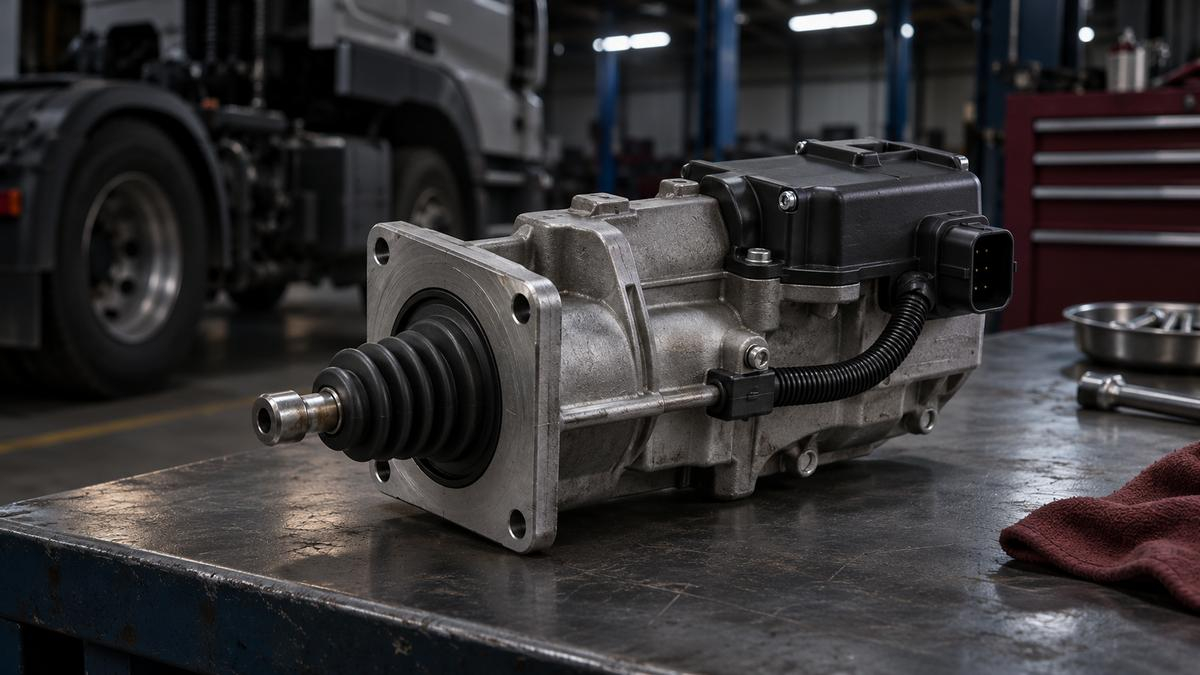
Editorial cover image illustrates a generic commercial-truck workshop component, not a VRA item.
Help other users with the choice - be the first to share your opinion about this post.