

From Donor Truck to Shelf: Inside the VRA Truckparts Dismantling and Quality Process
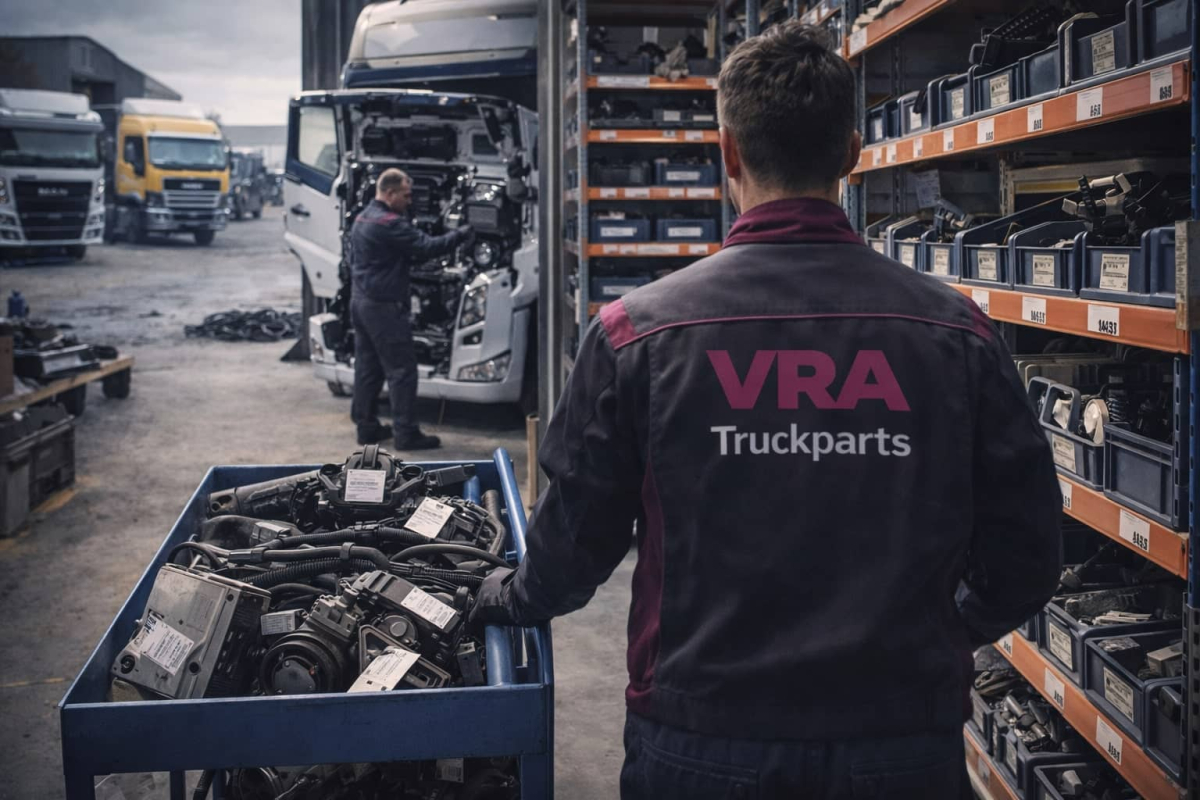
Many listings on our site simply say “Used OEM, tested, good condition”. Behind that short line is a detailed process that turns a working but end-of-life truck into hundreds of reliable parts for other vehicles.
This article walks you step by step through how VRA Truckparts works – so you know exactly what stands behind every part number you buy.
1. Sourcing the right donor trucks
We don’t break “anything we can get”. We focus on:
- Mainstream European brands: MAN, DAF, Volvo, Mercedes-Benz;
- Popular long-haul and regional models: TGX/TGS, XF106, FH/FM, Actros;
- Primarily Euro 6 vehicles, with known emissions packages;
- Trucks that are end-of-life due to age, fleet renewal or accident damage, not catastrophic mechanical failure of core components.
That means most donors are still valuable technically, even if the fleet has moved to newer models.
2. Initial inspection and diagnostics
Before stripping starts, our team:
- Performs a visual walk-around to log existing damage.
- Checks fluids for signs of major internal failure.
- Attempts to start and run the engine where safe.
- Connects diagnostics to read fault codes from major ECUs (engine, gearbox, braking, ECAS, safety systems).
Parts associated with unresolved critical faults are either:
- excluded from sale, or
- clearly described as “for repair / spares”.
3. Safe depollution and strip-down
As a responsible dismantler we:
- drain all fluids (oils, coolants, AdBlue, fuel);
- remove batteries and hazardous components correctly;
- follow UK and EU End-of-Life Vehicle rules, which aim for up to 95% recovery and 85% recycling by weight.
Only then does major dismantling begin:
- cab, chassis and driveline components are removed using proper lifting and support equipment;
- wiring looms are disconnected at plugs where possible, not cut;
- complex assemblies such as ECAS valve blocks, AEBS radar units or ECU clusters are stored as complete units.
4. Identification, OEM numbers and grading
Every part that enters stock is:
- Identified by OEM number, brand and description.
- Where stamping isn’t clear, we cross-reference using dealer catalogues and specialised databases.
- Tagged with donor details:
- brand, model, year, Euro class;
- odometer reading (where available);
- cab and axle configuration.
- Graded for condition:
- Grade A – excellent used condition, minimal cosmetic wear.
- Grade B – normal used wear, small marks or paint defects.
- Grade C – visible cosmetic damage but fully functional (ideal for working trucks where looks aren’t critical).
This grading appears in product descriptions so you can decide what is suitable for front-line tractors vs yard shunters or export units.
5. Testing and cleaning
Whenever it is safe and practical, we carry out functional tests:
- electrical testing of ECUs, control modules, switches and actuators;
- pressure and leak checks on tanks, radiators and intercoolers;
- movement checks for suspension components, steering gear and cab tilt systems.
Parts are then cleaned:
- caked-on dirt removed to reveal any hidden damage;
- mounting faces and threads cleared;
- electronics dried and wiped (never pressure-washed).
Cleaning is not just cosmetic; it makes it easier for your workshop to spot any issues before installation.
6. Professional photography and listing
Every part is photographed from several angles:
- overall view;
- close-ups of OEM stickers and cast numbers;
- detailed shots of any defect, scratch or crack.
Listings on VRA-TRUCKPARTS.co.uk and our other channels then include:
- clear title with brand, model, part name and OEM numbers;
- compatibility notes (e.g. “MAN TGX Euro 6, certain D26 engines only”);
- condition grade and comments;
- location in our warehouse for quick picking.
This is why photos in our listings are rarely “stock” images – they show the actual part you will receive.
7. Storage and stock management
After listing, all components go onto designated racks:
- body and cab panels stored to avoid warping;
- glass stored safely to prevent scratching;
- electronics kept dry and protected from temperature extremes;
- heavy components (axles, gearboxes) placed on pallets, ready for forklift loading.
Correct storage means a part you order today is in the same state as when it was first inspected, even if the donor arrived months earlier.
8. Picking, packing and shipping
When you place an order:
- Our team picks the exact part from its rack using the internal stock code.
- The part is visually checked against the online photos to ensure a match.
- It is securely packed:
- small items in boxes with padding;
- larger items palletised and wrapped;
- fragile components (lights, mirrors) given extra protection.
- We dispatch via trusted carriers (parcel or pallet networks) with tracking.
For UK and EU customers that means predictable transit times and less risk of transport damage.
9. What this process means for you
Because the whole chain – from donor selection to packing – is under one roof, buying from VRA Truckparts gives you:
- confidence that parts haven’t passed through multiple unknown middlemen;
- honest descriptions backed by photos and diagnostic checks;
- components that support both uptime and sustainability goals.
When you see “Used OEM – tested – VRA Truckparts”, you now know the story behind that line.
Help other users with the choice - be the first to share your opinion about this post.