

Volvo FH and FM Used Parts Buying Guide: Common Failures, OEM Numbers and Inspection Tips
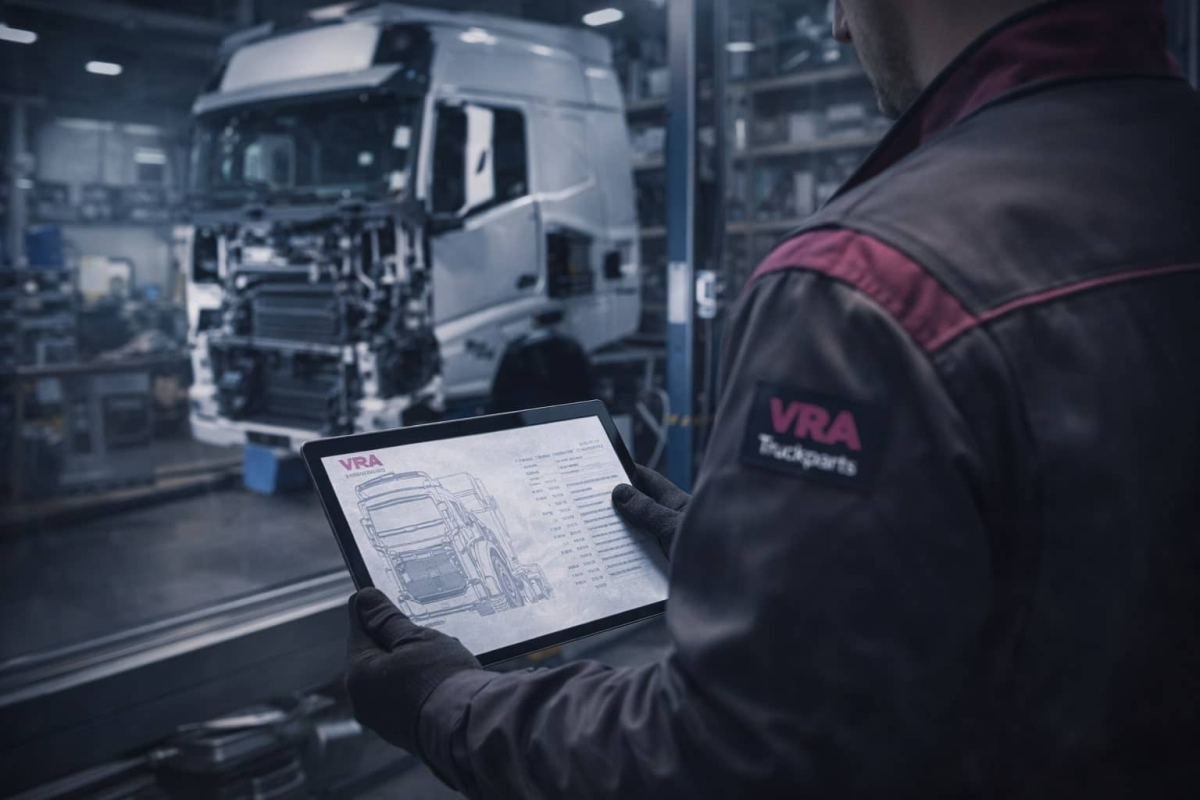
Volvo FH and FM trucks are a backbone of long-haul operations across the UK and Europe. They’re comfortable, efficient and popular – which also means there is a very active market in used OEM Volvo parts.
If you run FH3/FH4 or FM trucks, this guide will help you:
- understand typical wear and failure points;
- choose the right used OEM components;
- avoid common ordering mistakes;
- use VRA Truckparts more effectively.
1. Know your exact model and generation
Before you even look at a part number:
- Confirm the model (FH, FH4, FM, FMX).
- Note the year and Euro standard (Euro 5 vs Euro 6).
- Check the chassis number (VIN) and engine code on the VIN plate.
- Identify the cab type (low, high, Globetrotter etc.).
Many parts – especially cab panels, lights, electrics and exhaust/AdBlue components – differ subtly between:
- pre-facelift and facelift FH4;
- FH vs FM;
- day vs sleeper vs high-roof cabs.
Having this information to hand makes it far easier for a dismantler to match your truck.
2. Common Volvo FH/FM wear areas and what to look for
Industry overviews of used Volvo FHs highlight recurring issues such as door and window components, electrical system faults, central locking problems, seals and occasional brake issues.
Here’s how that translates into used parts buying:
a) Doors, windows and interior trim
Typical problems:
- window regulators slowing or failing;
- worn hinge pins causing heavy doors to drop;
- cracked interior plastics, especially on high-mileage trucks.
When buying used:
- ask for clear photos of the hinge areas and mounting points;
- check that window mechanisms have been tested in the donor cab;
- match interior colour codes where possible (important for fleet image).
At VRA Truckparts, complete doors are usually sold with:
- OEM glass, hinges, handles and wiring included;
- photos of any dents or scratches so there are no surprises on delivery.
b) Lighting & mirrors
FH and FM headlights, fog lamps and mirror assemblies work hard in real-world haulage. Cheap non-OEM replacements can have poor light output and fit, so used factory units are often a better solution.
When you order:
- check whether your truck uses halogen, xenon or LED versions;
- match additional features – headlamp levelling, cornering lights, daytime running light styles;
- for mirrors, match options like wide-angle glass, heating and electric adjustment.
Always inspect mounting lugs and adjusters for damage when the part arrives. A good dismantler will note any broken tabs in the description and price accordingly.
c) AdBlue, NOx sensors and exhaust components
AdBlue and emissions issues are a frequent pain point on modern Volvos. Common storylines in owner forums include recurring NOx sensor failures, dosing issues and SCR faults.
With used parts:
- insist on genuine Volvo NOx sensors and dosing modules where possible – these communicate correctly with the ECU;
- ask how long the donor truck ran without emissions faults before dismantling;
- use a quality diagnostic tool to reset adaptations and clear learned values after installation.
Never fit used emissions components blindly; always combine them with good diagnostics and proper wiring checks.
d) Suspension, steering and brakes
Long-haul FH/FMs can rack up huge mileages. Look carefully at:
- front springs and airbags;
- control arms and bushes;
- steering linkages and drag links;
- brake actuators and calipers.
When buying used:
- prioritise parts from lower-mileage, younger donor trucks;
- ask for photos taken before removal, showing how the component sat on the chassis;
- for ECAS height sensors and valve blocks, request confirmation that no related fault codes were present.
3. Working with OEM numbers
Volvo trucks are strongly OEM-number-driven. For best results:
- Use your dealer or existing part to find the current Volvo part number.
- Note any older numbers stamped on the component – dismantlers often list these too.
- Share both with VRA when enquiring; we can cross-reference supersessions where possible.
A good listing will show:
- at least one OEM part number;
- brand (e.g. Volvo, Wabco, Knorr);
- donor truck details (model, year, Euro class);
- clear photos of the number stamp or label.
If the number on your old part and the listing is slightly different (e.g. suffix letter or revision change), ask for advice before ordering.
4. Visual inspection checklist on delivery
When your shipment from VRA Truckparts arrives, don’t send it straight to the workshop corner. Check:
- Packaging – pallet or box intact, no obvious crush damage.
- Casting & housings – no fresh cracks, repairs or welds not shown in photos.
- Threads & studs – not stripped or cross-threaded.
- Electrical connectors – pins straight, no green corrosion, seals present.
- Moving parts – arms and linkages move freely without excessive play.
Raise any concerns before fitting; once a part has been installed and driven on, it’s much harder to establish whether damage occurred in transit or on the vehicle.
5. How VRA Truckparts can help with Volvo parts
For FH and FM trucks VRA focuses on tested OEM components, especially in:
- cabs and interiors;
- front panels, bumpers and lighting;
- chassis, suspension and braking;
- AdBlue and emissions hardware;
- ECUs, wiring looms and electronic modules.
Because every part comes from our own dismantled trucks, we can often provide:
- photos of the donor vehicle;
- notes on mileage and service condition;
- confirmation of basic function tests.
Combine that with accurate OEM numbers and your own diagnostics, and used Volvo parts become a low-risk, high-value way to keep your fleet on the road.
Help other users with the choice - be the first to share your opinion about this post.